The problem
Wildfire Soot & Ash
Wildfire smoke deposits carbon, ash, and partially combusted organic compounds onto every exterior surface — the carbon is acidic and slowly etches paint and stucco when combined with morning marine-layer moisture.
Get a quote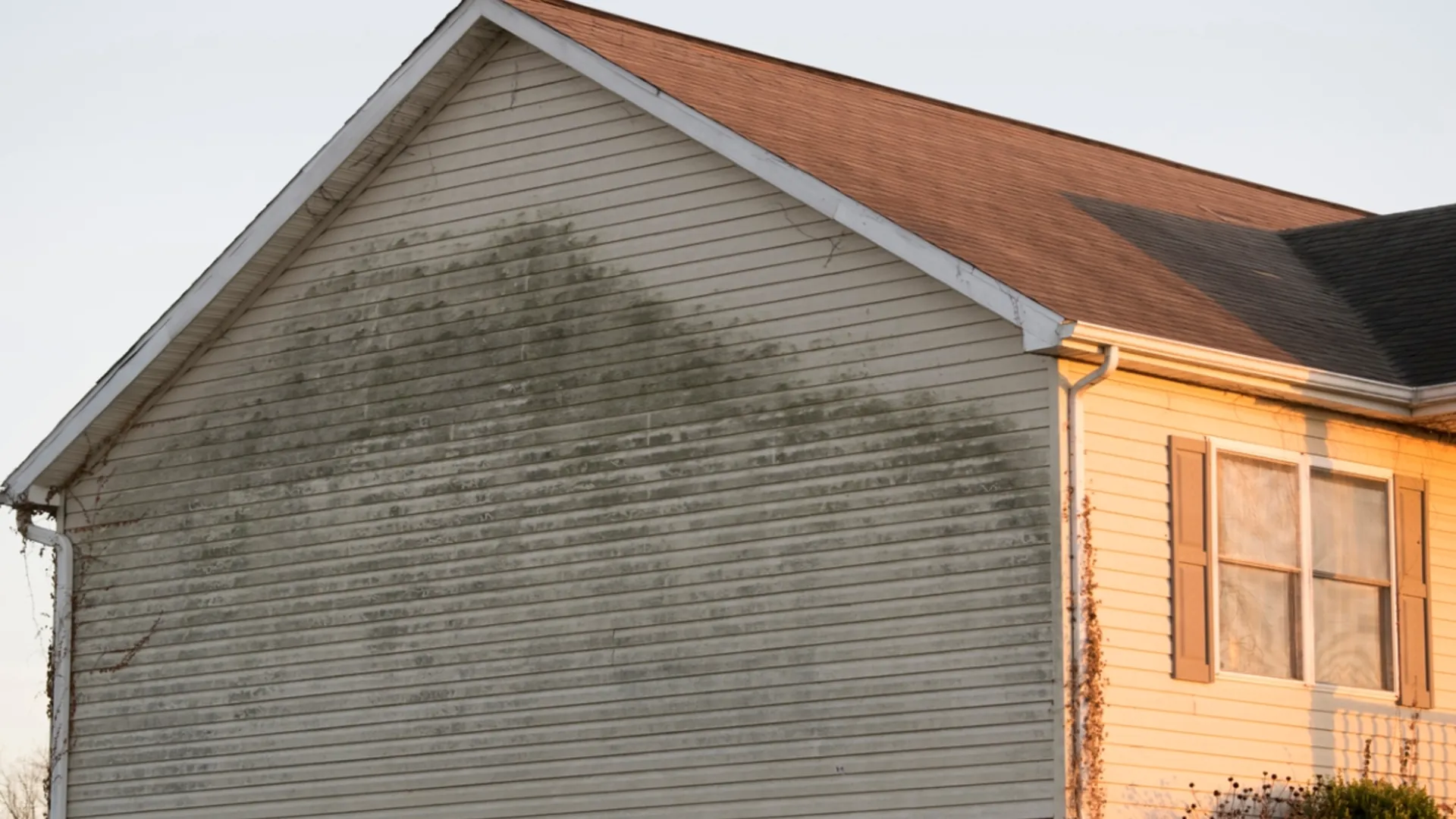
What is actually on your house
Wildfire residue is not dirt, and treating it like dirt is how porous surfaces get permanently marked.
Three things land on an exterior after a smoke event. Ash is the mineral skeleton of whatever burned, mostly carbonates and oxides, strongly alkaline when fresh. Fine particulate is the sub-micron carbon that gives smoke its color, small enough to settle into the pores of stucco and the texture of a flat paint film. Condensed organics are the real trouble: tars, resins and partially combusted compounds that come off the plume as vapor and condense onto cool surfaces as a thin, sticky film.
That third component is why wildfire residue smears instead of brushing away, why it holds the smell, and why a plain rinse makes it worse. It is grease carrying soot.
Sonoma Valley has run this drill repeatedly — 2017, 2019 and 2020 all put smoke over the valley floor, and plumes from fires elsewhere in the state reach us most late summers. It is a recurring maintenance item here in a way it is not elsewhere.
Why it does not behave like ordinary dirt
It smears. Dry-wiping a sooty wall with a rag, a broom or a leaf blower grinds the particulate across the surface and presses it into the texture. Every pass covers more area with less removable residue.
Water alone sets it. Hitting a dry sooty wall with a hose carries the particulate into the substrate as the water soaks in, then leaves it there as the water evaporates. On stucco especially, that turns a surface deposit into an embedded one.
It is chemically active. Fresh ash is alkaline enough to dull a coating's sheen where it sits in moisture, while the acidic gases dissolved in that same moisture attack the film from the other direction. Residue plus the valley's morning marine-layer damp plus time is what leaves permanent marks.
It is not alive. The important distinction for method. Mildew and algae need a biocide, because the goal is killing an organism. Soot needs a surfactant, because the goal is breaking the bond between a greasy film and the surface it condensed onto. Chlorine does very little useful work on soot.
The correct sequence
Order matters more here than on any other job we do.
- Rinse before anything touches the surface. A low-pressure rinse from the top down removes the loose, unbonded material first. No brushing, no wiping, no blower before the surface is wet.
- Work strictly top-down. Roof edge, then eaves and soffits, then walls, then hardscape. Residue washed off an upper surface lands on a lower one, so cleaning upward means redoing everything underneath.
- Apply a surfactant and let it dwell. The chemistry has to emulsify the organic film so the rinse can carry it off. Dwell runs longer than a biological wash, and the surface must stay wet throughout — chemistry allowed to dry on a sooty wall makes a second problem.
- Rinse gently, then repeat. Heavily affected surfaces take two passes. The first lifts the bulk; the second gets what the first loosened but did not carry.
- Protect and flush the landscaping. Soot-laden runoff is concentrated. Beds get pre-wet, and everything downhill gets diluted and flushed afterward.
All of it runs under 500 PSI as a soft wash. Pressure is the one tool that cannot help here, because force on a porous surface drives residue inward.
Surface by surface
Stucco. The highest-risk surface in the valley, because the open texture that makes stucco discolor so readily is also what holds particulate. It gets the longest dwell and the gentlest rinse, and it is where getting to it early matters most.
Painted siding. Wood, fiber cement and vinyl all clean well, with the usual caution about laps — spray with the overlap rather than up underneath it, so water does not end up behind the wall. Check the coating first: a chalking finish releases soot and pigment together.
Windows and screens. Glass is easy; screens are where the residue accumulates, and they clean best lifted out, laid flat and rinsed from the back side so the material leaves the way it arrived. Clean the glass after the screens, not before.
Decks and hardscape. Horizontal surfaces catch the heaviest fall. On wood this is a chemistry-and-rinse job rather than a pressure job; see deck and fence cleaning.
Outdoor furniture and cushions. Fabric, slings and umbrellas hold both residue and the smell, and they are usually why a patio still smells like smoke after the hardscape is clean. That is outdoor furniture cleaning.
The practical post-fire list
- Change the HVAC filter, then clean the intake screen. A loaded intake redistributes residue through the house every time the system cycles. Do this before the exterior wash if you have to choose.
- Clear the gutters. Ash plus the first rain makes a slurry that sets in the trough and plugs downspouts.
- Photograph everything before cleaning if there is any chance of an insurance claim. Wide shots plus close-ups of each affected surface, and keep receipts for any cleaning work. A cleaned surface is very hard to make a claim about afterward.
- Separate the smell question from the wash question. Exterior cleaning addresses outdoor odor. Indoor odor does not come from your siding.
Timing and cost
Soot is best treated inside the first 30 to 60 days, before repeated wetting and drying cycles bond it into porous surfaces. A post-fire exterior wash starts at $495 for a typical home. Heavily affected properties and anything requiring multiple passes across a large envelope get a walkthrough and a written quote rather than a number over the phone — request one here.
What an exterior wash will not fix
- Smoke odor inside the house. That is residue in textiles, drywall and ductwork, and it belongs to a fire restoration contractor. We will say so plainly rather than sell you a wash that cannot help.
- Heat damage. Scorched, blistered or melted finishes, warped vinyl, and crazed glass are refinishing or replacement, not cleaning. Washing a heat-damaged coating usually just removes more of it.
- Surfaces past cleaning. Embedded residue in old, chalking paint or very porous stone will not fully release. When we see that, we say so before starting and let you decide whether to clean, coat or replace.
- Air quality testing, interior work, content cleaning. We are exterior-only. Anything inside the envelope is somebody else's trade.
Questions we get
- Can I just hose the ash off my house after a fire?
- A plain water rinse is the most common mistake people make. Wildfire residue is fine enough to be carried into the pores of stucco and the texture of flat paint, so water alone drives it in rather than lifting it out. The residue also needs a surfactant to release, because the condensed organics in smoke are greasy rather than dusty. Knock the loose material down with a gentle rinse, then wash with chemistry that actually emulsifies it.
- How long after a wildfire should I wash the outside of my house?
- Sooner is better, and the practical window is the first 30 to 60 days. Residue that goes through repeated wetting and drying cycles bonds into porous surfaces, and here the summer marine fog wets walls most mornings even with no rain in the forecast. If there is any chance of an insurance claim, photograph every affected surface before anything gets cleaned.
- Does an exterior wash get rid of the smoke smell?
- It removes the odor source sitting on the outside of the building, which makes a real difference around decks, patios, entries and outdoor furniture. It does not touch smoke odor inside the house. Interior smell comes from residue held in carpet, upholstery, drywall and ductwork, and that is a fire restoration trade with its own equipment.
- Should I clean the ash off my window screens and HVAC intake myself?
- Screens and intakes trap more residue per square inch than anything else on the property, and the intake matters most because a dirty one pushes residue into the house every time the system runs. Screens clean best lifted out and laid flat, rinsed from the back side so the residue exits the way it came in. Replace the HVAC filter after a smoke event rather than trying to clean it.
- Did the ash damage my paint, or will it wash off?
- Most of it washes off if it is handled before it sets. Fresh ash is strongly alkaline, and residue that sits in morning marine-layer moisture against a coating can dull the sheen and leave a chalky cast that cleaning will not bring back. Scorched or heat-blistered finishes are past cleaning entirely and need refinishing. We will tell you which category a surface is in before quoting it.
Often found alongside
Mildew & Mold Treatment
The dark streaks and patches on your stucco, painted siding, or shaded walls.
Read moreBird & Bat Dropping Removal
The white-and-grey staining on entry walls, awnings, and outdoor furniture. Removable, but time-sensitive.
Read moreMoss & Algae Removal
The green stuff on your driveway and shaded walls. It's more than a cosmetic issue.
Read more