METHOD · 01 OF 06
Soft Wash
Low-pressure cleaning for surfaces that high-pressure would damage.
Get a soft wash quote →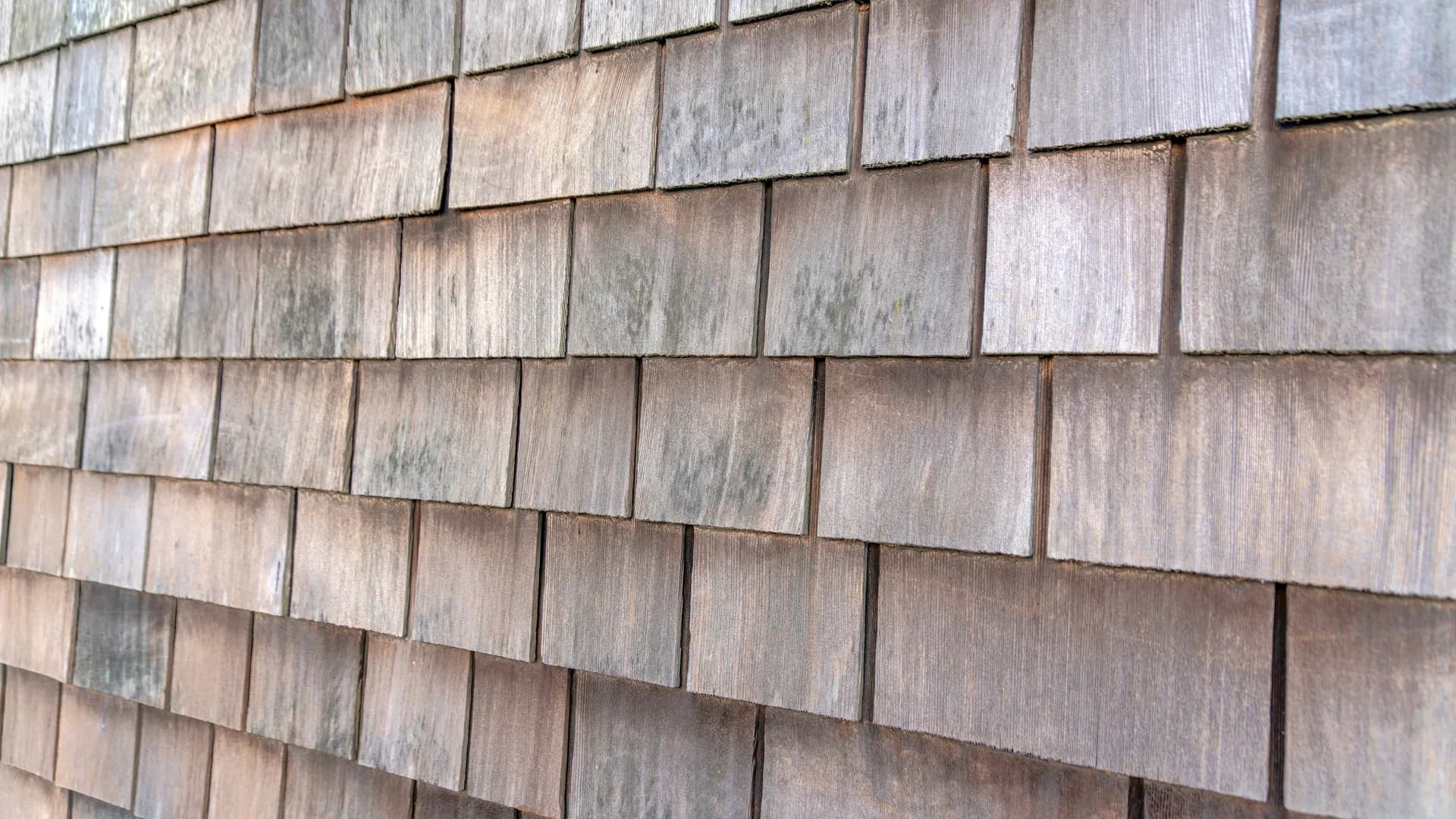
Soft wash vs. pressure wash
Pressure Wash
- Spec: 2,500 – 4,000 PSI
- Method: Mechanical blast removes buildup through force
- Best for: Concrete, sealed stone, dumpster pads, fences
Risks when used on soft surfaces:
- Paint stripping
- Stucco erosion and pitting
- Wood grain fuzzing and splintering
- Mortar washout between bricks
- Water infiltration behind siding
Soft Wash
- Spec: Under 500 PSI (garden hose pressure)
- Method: Biodegradable chemistry kills algae, mildew, and biological growth at the spore level; dwell time does the work, gentle rinse removes the dead organic matter
- Best for: Stucco, painted siding, wood, roofs, stone, composite
Risks when applied correctly: None.
What's actually growing on your house
The discoloration on a Sonoma Valley home is almost never dirt. Dirt rinses off in the first winter storm. What stays is alive.
Algae is the green film on north and east walls. It needs only moisture and indirect light, which is why it shows up on the shaded side of a house and nowhere else.
Mildew is the grey-to-black speckling, most visible on light stucco and painted trim. It feeds on the organic binders in paint and on the pollen and dust that settle into the surface texture.
Gloeocapsa magma is the cyanobacterium behind black roof streaks. It eats the limestone filler in asphalt shingles and spreads downslope with every rain, which is why the streaks always run vertically.
Lichen is the hard, crusty, pale-green patch that will not rinse off at any pressure. It is a fungus and an alga living together, and it anchors into the surface with root-like structures. Lichen needs chemistry and patience. Force just takes the surface with it.
Pressure washing removes the visible layer of all four and leaves the organism. That's why a blasted wall looks clean for one season and looks worse the next — the growth comes back into a surface that is now rougher and holds moisture better than before.
What we actually use
Our standard soft wash blend is sodium hypochlorite at 0.5% concentration — specifically diluted to kill biological growth without bleaching siding paint or damaging adjacent landscaping. A biodegradable surfactant lets the chemistry cling to vertical surfaces instead of running off, and a corrosion inhibitor protects metal fixtures and fasteners.
Dwell time is 5 to 10 minutes depending on the surface and how much buildup you have. Then a gentle rinse at house-hose pressure removes the dead organic matter. Landscaping is pre-wet before application and thoroughly rinsed afterward — your roses and your hydrangeas don't notice we were there.
No power tools touch the surface. The chemistry does the work.
Wood gets a different blend
Cedar shake, redwood, and bare wood siding get a sodium percarbonate solution rather than hypochlorite. Percarbonate breaks down into soda ash, water, and oxygen, lifts the grey oxidized layer, and kills moss and mildew without pulling the warm tone out of the wood. On a sixty-year-old redwood board-and-batten wall, that difference is the whole job.
Roofs run stronger and slower
A roof mix is more aggressive than a siding mix, applied from a ladder or the ground with a long-range nozzle, never from on top of the shingles. We don't walk a roof we don't have to walk, and we never put mechanical pressure on asphalt.
The Asphalt Roofing Manufacturers Association's own guidance on algae removal is a chlorine solution at low pressure. Pressure washing a composition roof strips the ceramic granules that make the shingle UV-resistant, takes years off its life, and voids most manufacturer warranties. If somebody quotes you a pressure wash on an asphalt roof, that is the end of the conversation.
Where this matters most in Sonoma Valley
Our climate is built for biological growth. Rain concentrates between November and April, then marine fog pushes up the valley from San Pablo Bay on summer mornings and holds moisture against walls long after the rain has stopped. Add a mature oak canopy — and most older Sonoma, Glen Ellen, and Kenwood properties have one — and the shaded side of a house never fully dries out.
The pattern repeats on nearly every property we look at:
- The north wall is two shades darker than the south wall
- Streaking starts under the eaves and runs down, following water
- Growth is heaviest below sprinkler spray and gutter joints
- Lower-valley homes in Boyes Hot Springs, Agua Caliente, and El Verano show it earlier and heavier than properties up at Kenwood elevation
None of that is neglect. It's the climate, and it's why a soft wash is maintenance rather than rescue.
How long it lasts
A correctly executed soft wash holds for 18 to 24 months on most Sonoma Valley homes. The variables that move that number are shade, irrigation, and tree cover — not the wash.
A fully sun-exposed stucco wall can go three years. A north-facing wall under a live oak with a sprinkler head hitting it may need attention in twelve months. If your property is on the short end of that range, an annual or bi-annual plan costs less than the two separate one-off washes it replaces.
When we'll tell you not to do it
Soft washing doesn't fix everything, and we would rather say so before taking the job.
- Failing paint. If the paint is already lifting or chalking heavily, the wash will accelerate it. Clean it, then plan to paint — don't expect the wash to save a coating that's done.
- Hard water scale and efflorescence. White mineral deposits are not biological and will not respond to a biocide. That's a different treatment.
- Rust and tannin bleed. Metallic and organic stains need an acid or oxalic treatment, not a biocide.
- Bare, weathered wood you intend to seal this year. Wash it as stain prep instead, so the timing lines up with the coating.
If what you're looking at falls into one of those, say so when you call and we'll quote the right method instead of the convenient one.
Problems this solves
Moss & Algae Removal
The green stuff on your driveway and shaded walls. It's more than a cosmetic issue.
Read moreMildew & Mold Treatment
The dark streaks and patches on your stucco, painted siding, or shaded walls.
Read moreBird & Bat Dropping Removal
The white-and-grey staining on entry walls, awnings, and outdoor furniture. Removable, but time-sensitive.
Read moreWildfire Soot & Ash Removal
The fine grey-black residue left on exteriors after a wildfire passes through Sonoma Valley.
Read more