The problem
Outdoor Furniture Restoration
Outdoor furniture greys, mildews, and degrades with seasonal exposure — most pieces homeowners replace could be restored at a fraction of the replacement cost.
Get a quote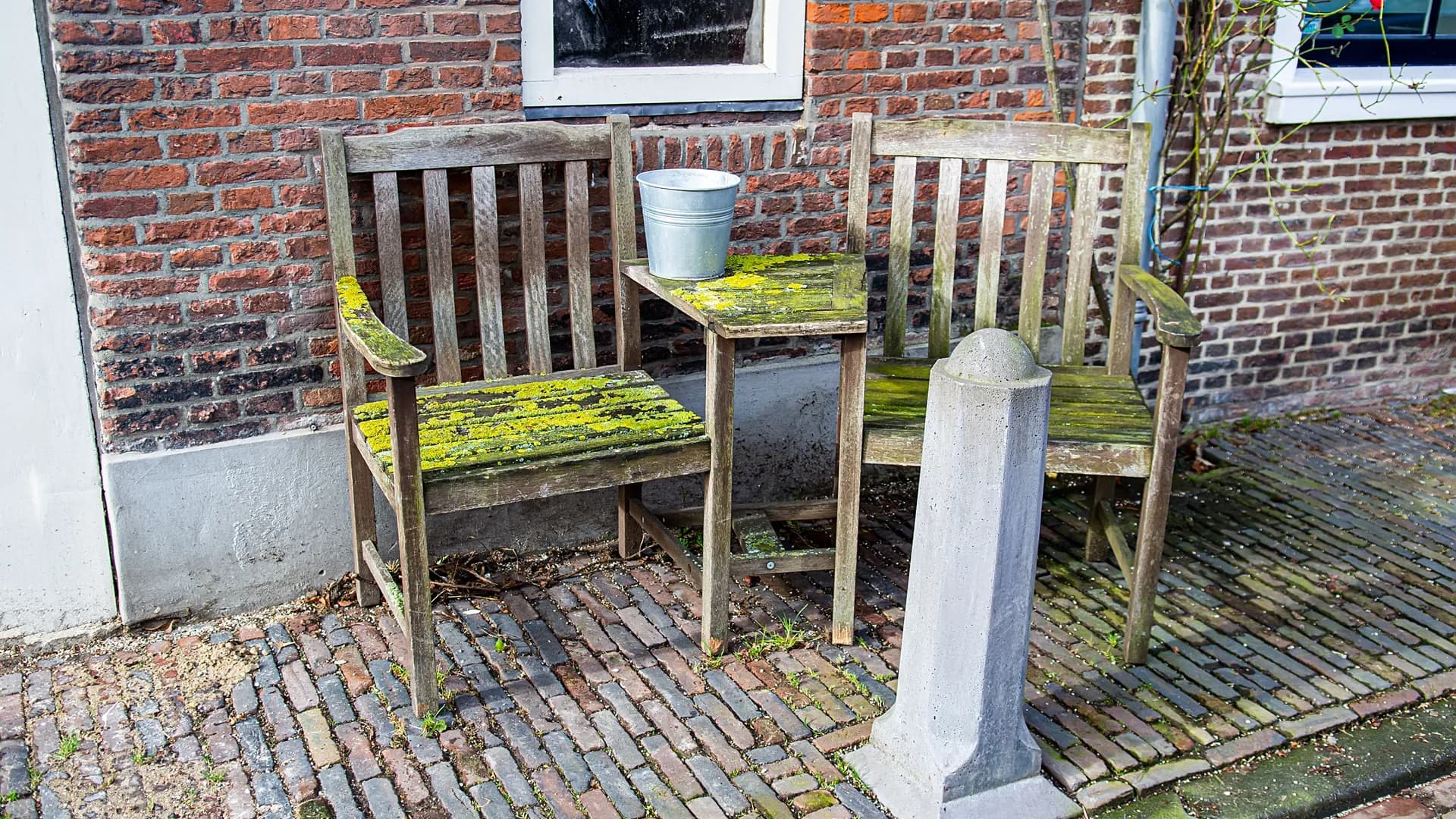
Every material fails differently
There is no such thing as cleaning "patio furniture." A six-piece set can easily contain four materials with four incompatible methods, and the fastest way to ruin an expensive set is to treat it all the same.
Powder-coated aluminum. The coating is the entire protection — underneath it is bare aluminum that oxidizes. Abrasive pads and strong chlorine both chalk a powder coat, leaving a dull, slightly white surface that no amount of further cleaning restores. These get a mild detergent, a soft brush, and a rinse. If the coat has already chalked, cleaning makes it uniform rather than new.
Teak and other hardwoods. The grey is UV oxidation of the surface cells, not dirt. Sodium percarbonate lifts that oxidized layer and the warm tone comes back; an oxalic brightener afterward neutralizes the pH. Then you have a decision worth making deliberately. Oiling returns the furniture to a rich honey color but commits you to re-oiling every season or so, and oil on a shaded patio can feed mildew. Leaving it to weather back to silver-grey is a legitimate choice — grey teak is not damaged teak, it is just teak. We can do either; we would rather you choose on purpose than by default.
All-weather wicker and woven resin. The weave is the problem twice over. Mold colonizes the gaps between strands where water sits and air does not move, so the growth is down in the texture rather than on the face of it — a wipe-down does nothing. And high pressure catches an edge, lifts a strand, and unravels the weave, which cannot be rewoven in place. This is dwell time and a soft brush worked along the weave, not across it.
Sling fabric and solution-dyed acrylic. On Sunbrella-type fabric and vinyl-coated polyester sling, mold does not grow inside the fiber. It grows on the surface film of dust, pollen, and body oil that builds up on top of it. That is good news, because it means the fabric does not have to be attacked — it has to be dwelled on and rinsed. The catch is chemistry selection. Solution-dyed acrylic tolerates dilute chlorine; a printed or piece-dyed fabric does not, and bleach on the wrong fabric takes the color with the mold.
Cushions and foam inserts. The cleaning is straightforward and the drying is not. Foam holds water long after the cover feels dry, and a cushion put back damp grows mold from the inside out, which is unreachable without disassembly. We clean cushions on a day with enough sun and air to get them genuinely dry, and we will move the booking rather than hand back a damp cushion.
Umbrellas and shade sails. Washed open, never closed. A canopy folded while damp mildews along every crease, which is why most umbrellas show mold in neat radial lines. Sails come down, get laid out, and go back up dry.
Cast iron and wrought iron. Primarily a corrosion question rather than a dirt question. Cleaning reveals how much rust is already there under the grime, and it is better to see it and decide about paint than to leave it spreading under a coating. See rust stains for what the staining does to the surface underneath.
Glass and stone table tops. Water spotting on glass and etching on a stone top are mineral, not biological, and they need an acid rather than chlorine. Sprinkler overspray is the usual culprit — a table that sits inside an irrigation arc gets re-spotted every few days no matter how well it is cleaned.
Stainless steel and chrome. Specialty metal cleaner and a soft polish, worked with the grain on brushed stainless. Tea staining — the faint brown speckle on lower-grade stainless outdoors — is surface corrosion, and it returns if the grade is wrong for the environment.
What caused it, which is usually a habit
Most of the damage we see was not caused by weather alone. Three patterns account for most of it.
Stacking furniture wet. Chairs stacked after a rain or a wash trap water between the seats where it cannot evaporate. Those contact points are where the mold ring always is.
Storing under the oak canopy. Moving a set under a tree for the winter feels protective. In practice it puts the furniture in constant shade, under dripping canopy and leaf litter, exactly where nothing dries. Summer marine fog pushing up the valley from San Pablo Bay keeps those mornings damp well past the end of the rains.
Covers that trap rather than shed. A sealed, non-breathable cover over furniture that was not bone dry becomes a humidity chamber, and furniture under a bad cover often comes out worse than furniture left in the open.
Why this is usually an add-on
Furniture cleaning is hand work on a lot of small surfaces, which means it rarely clears a service minimum on its own. In practice it goes on the same visit as a deck or patio wash — the furniture has to come off the surface anyway, we are already set up, and the whole outdoor living area gets done at once rather than in two trips. If the patio also carries mildew and mold, the two jobs share the same chemistry and the same dwell time.
Timing
Late spring, for the same reason as everything else in this climate. Furniture comes out of the November-to-April rains carrying the season's growth, so cleaning in April or May buys you the whole summer of use. The other sensible window is before storage — furniture put away clean and dry comes out in spring roughly as it went in.
What restoration does not mean
We clean. We do not rebuild, and it is worth being clear about the line before the quote.
- No reupholstery, re-slinging, or re-weaving. Torn sling fabric, a split cushion seam, and a broken wicker strand are all repairs, not cleanings.
- No refinishing. We can brighten teak and we can oil it. We do not sand, strip, or repaint frames.
- No restoring a failed powder coat. Once a coat has chalked or flaked, cleaning evens it out. It does not bring the finish back.
- Degraded fabric comes out clean and still looks tired. Fabric that has lost its UV inhibitors is faded and thin, and cleaning removes the mold without returning the color. We say this before we start, because it is the most common disappointment in this work.
Pricing
- $95 for a typical patio set of six pieces
- Custom quote for sectionals, large cushion inventories, and full outdoor living spaces
Questions we get
- Can you pressure wash outdoor furniture?
- Almost never, and that is the single most common way good furniture gets destroyed. High pressure chalks powder-coated aluminum, fuzzes teak grain, unravels woven resin wicker, and drives water into cushion foam that then grows mold from the inside. Everything on a patio set gets soft wash chemistry at under 500 PSI with hand detail work, matched to the material.
- How do you get grey teak furniture back to its original color?
- The grey is UV oxidation of the surface wood cells, not dirt, so it lifts with a sodium percarbonate wash rather than scrubbing or pressure. Percarbonate breaks the oxidized layer down and the warm honey tone underneath comes back, then an oxalic acid brightener neutralizes the pH so the wood is ready for oil if you want it. Chlorine bleach does not belong on bare teak — it pulls the warmth out and leaves a washed-out yellow cast.
- Will bleach remove mold from Sunbrella cushions?
- On solution-dyed acrylic like Sunbrella the fabric itself tolerates dilute chlorine, but on most other outdoor fabrics it takes the color out permanently, so we identify the fabric before anything goes on it. Either way, mold on outdoor fabric grows on the surface film of dirt and body oil rather than inside the fiber, which means it is a dwell-and-rinse job rather than a scrubbing job.
- How long do outdoor cushions take to dry after cleaning?
- Plan on a full day of Sonoma sun, and longer if the patio is shaded by oak canopy. Drying time is the whole problem with cushions — the foam insert holds water long after the cover feels dry to the touch, and a cushion that goes back onto the furniture damp will grow mold from the core outward within a couple of weeks.
- Is it worth cleaning old patio furniture or should I just replace it?
- If the frame is sound and the finish is intact, cleaning is worth it, because teak, powder-coated aluminum, and solution-dyed acrylic all respond dramatically to the right chemistry. Replace it when the structure has gone — cracked resin weave, rusted-through iron, delaminated sling fabric, or foam that has broken down. We will tell you which category your set is in before we quote it.
Often found alongside
Mildew & Mold Treatment
The dark streaks and patches on your stucco, painted siding, or shaded walls.
Read moreMoss & Algae Removal
The green stuff on your driveway and shaded walls. It's more than a cosmetic issue.
Read moreBird & Bat Dropping Removal
The white-and-grey staining on entry walls, awnings, and outdoor furniture. Removable, but time-sensitive.
Read more